Pide or Lahmacun? A Short Guide to Turkish Flatbreads
5 min read
The Turkish word for breakfast is kahvaltı. It translates roughly as “before coffee,” which tells you two things: coffee comes later, and breakfast is an event in its own right.
A proper kahvaltı isn’t a plate. It’s a table. Dozens of small dishes, shared by everyone, eaten slowly over an hour or two with a pot of tea that never seems to run out.
What you’ll find on the table
Cheeses. At least two. A soft white cheese similar to feta, and a firmer aged one.
Olives. Black and green, usually with a little olive oil and oregano.
Honey and kaymak. Thick clotted cream with honey drizzled over it, spread on warm bread. This is the part people remember.
Eggs. Menemen, scrambled with tomatoes and peppers, or sahanda yumurta, fried in butter and served in the pan.
Tomatoes, cucumbers, peppers. Sliced fresh, seasoned with nothing but salt.
Jams. Sour cherry, fig, rose.
Bread. Lots of it. Fresh, warm, and replaced before you notice it’s gone.
The tea
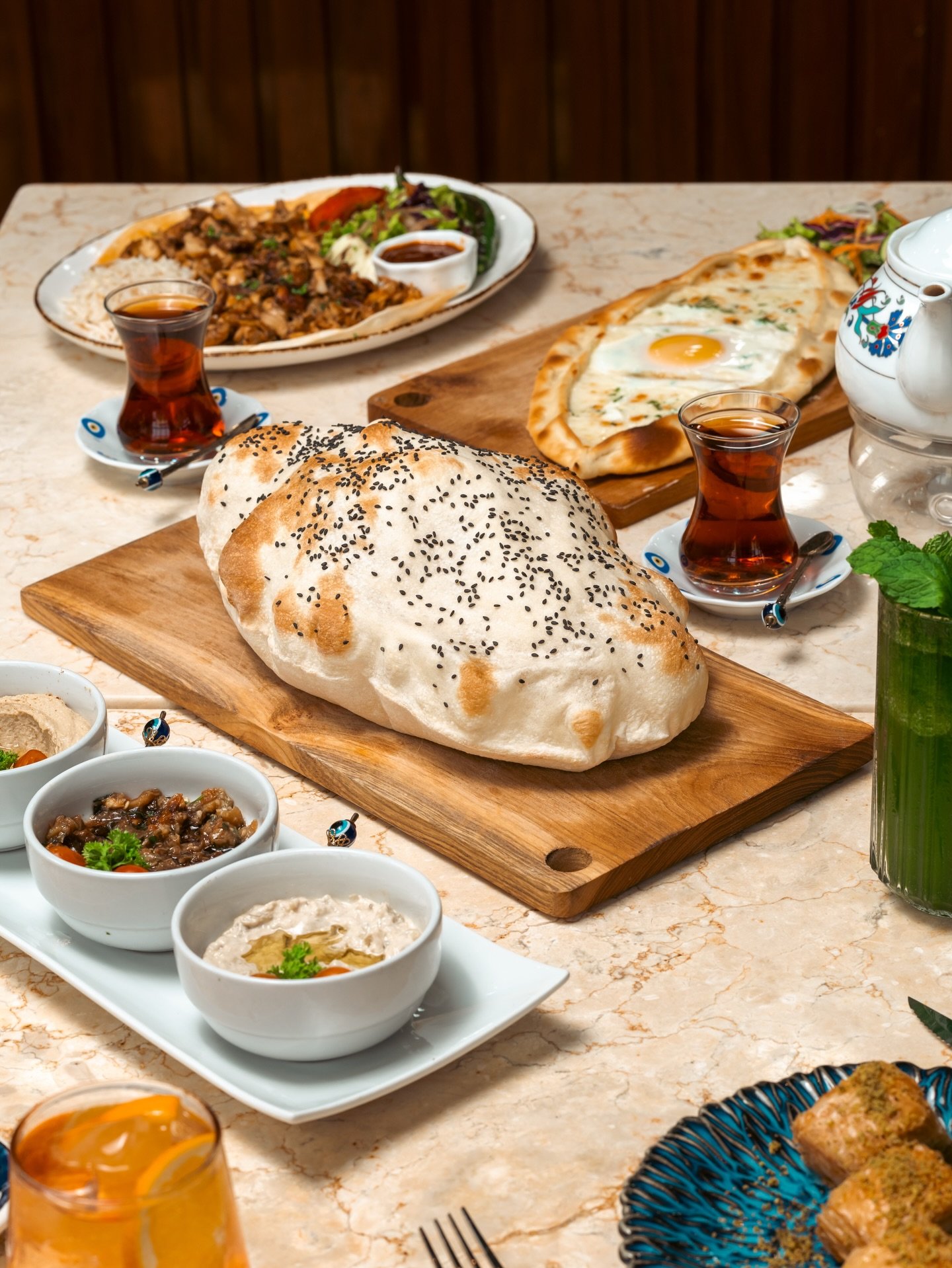
Turkish tea is brewed strong in a double teapot and served in small tulip-shaped glasses. You dilute it to taste with hot water. Sugar is optional. Milk is not offered.
How to eat it
Slowly. Kahvaltı is a weekend ritual in Turkey, a reason to sit with people you like and talk for longer than you planned. It doesn’t work if you’re in a hurry.
We serve it the same way in Seminyak. Come after a morning at the beach, order the table, and give it the time it deserves.

Tristique tempus condimentum diam donec. Condimentum ullamcorper sit elementum hendrerit mi nulla in consequat, ut. Metus, nullam scelerisque netus viverra dui pretium pulvinar. Commodo morbi amet.